
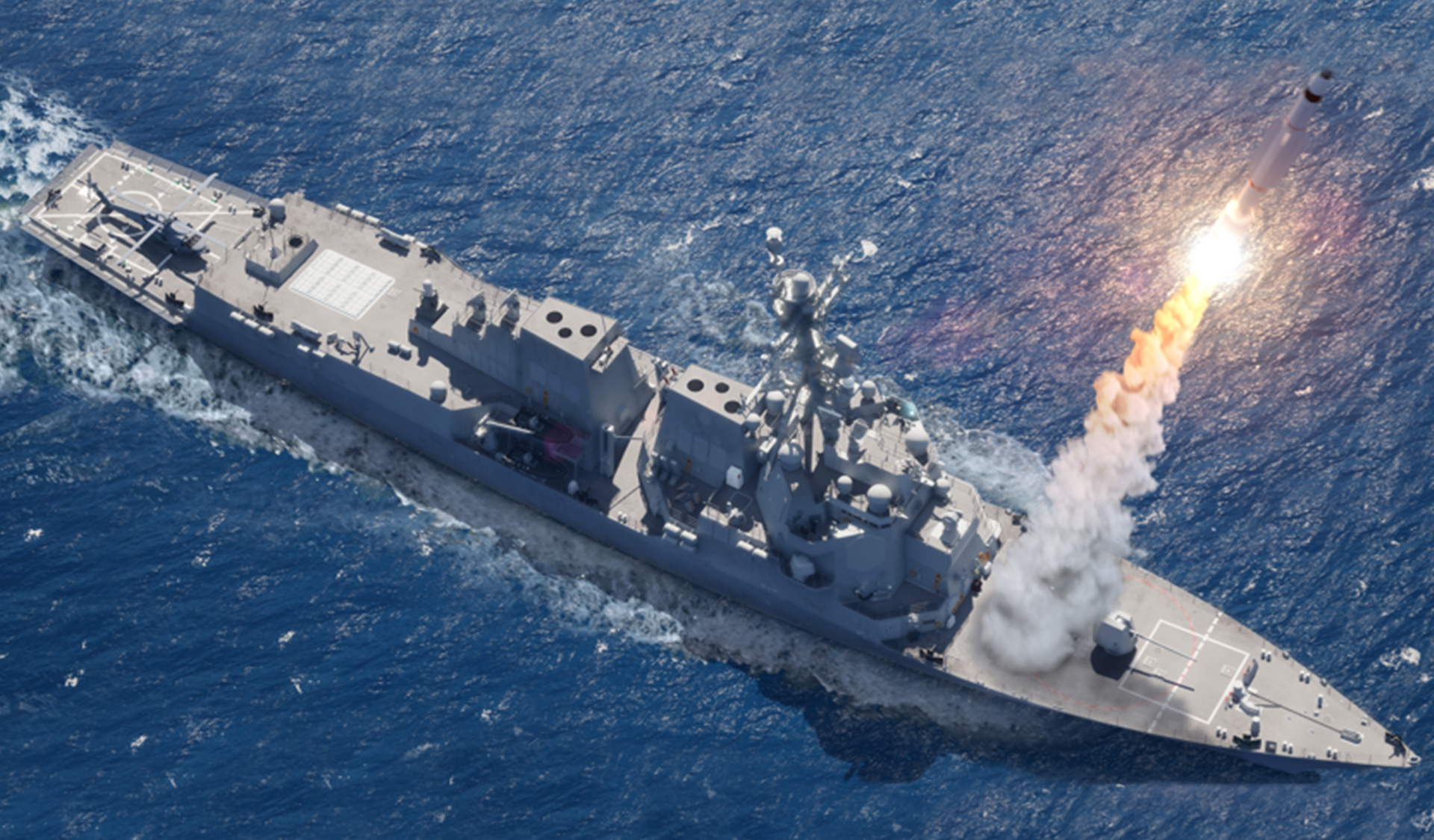
The Aegis Ballistic Missile Defense (Aegis BMD) is a sea-based missile defense architecture developed by Lockheed Martin and deployed primarily on U.S. Navy and allied naval vessels. It forms a central pillar of integrated missile defense networks designed to intercept ballistic missiles during their midcourse and terminal phases of flight.
Unlike fixed ground-based systems, Aegis provides mobile missile defense coverage, allowing naval forces to position interceptors closer to potential launch regions or defend maritime and coastal territories.
1. Technology & Design
Aegis BMD is built around the Aegis Combat System, an integrated naval warfare management platform capable of coordinating sensors, weapons, and tracking systems simultaneously.
The core technological elements of Aegis missile defense include:
- SPY-series phased-array radar
- Aegis battle management software
- Vertical Launch System (VLS) missile cells
- Standard Missile interceptor family
The primary sensor is the SPY-1 radar, a powerful multi-function phased-array radar capable of detecting and tracking hundreds of airborne objects simultaneously. It provides long-range surveillance and target discrimination, allowing operators to track ballistic missile trajectories across vast distances.
Newer Aegis variants also integrate the SPY-6 radar, which significantly improves sensitivity and tracking performance against complex threats.
The radar feeds tracking data into the Aegis command system, which performs threat analysis and calculates interceptor launch solutions in real time.
Interceptor missiles are launched from the Mark 41 Vertical Launch System, a modular deck-mounted launch architecture used on destroyers and cruisers.
Several interceptor variants are used for missile defense:
- SM-3 (Standard Missile-3) for exo-atmospheric interception during midcourse flight
- SM-6 (Standard Missile-6) for terminal-phase interception and anti-air defense
SM-3 interceptors use hit-to-kill kinetic impact, destroying ballistic warheads through direct collision outside the atmosphere.
The system also supports cooperative engagement, meaning a missile can be launched based on targeting data from another platform within the network.
2. Role & Battlefield Function
Aegis BMD operates at the operational and strategic levels of missile defense, providing both regional protection and forward-deployed interception capability.
Its primary mission is interception of short-, medium-, and intermediate-range ballistic missiles during the midcourse phase of flight.
Typical operational roles include:
- Protection of carrier strike groups
- Defense of allied territories
- Interception of ballistic missiles launched toward land targets
- Forward-deployed missile defense near potential launch regions
Within integrated missile defense architecture, Aegis occupies the midcourse interception layer, engaging missiles in space before they reenter the atmosphere.
Naval mobility allows Aegis-equipped ships to operate in strategic locations such as:
- Forward maritime chokepoints
- Allied coastal waters
- Missile launch corridors
Aegis ships can also provide missile defense coverage for land-based regions when positioned offshore.
3. Capabilities & Limitations
Aegis BMD’s greatest capability is mobility combined with long-range interception.
Unlike fixed missile defense installations, naval platforms can reposition rapidly in response to emerging threats. This flexibility allows commanders to extend defensive coverage across large geographic areas.
The SPY radar system provides exceptional tracking capacity, enabling the system to monitor multiple ballistic missiles simultaneously.
SM-3 interceptors allow exo-atmospheric interception, meaning warheads can be destroyed before reentering Earth’s atmosphere.
Networked engagement capabilities enable Aegis ships to cooperate with other missile defense systems, sharing sensor data and targeting information.
However, limitations exist.
First, each ship carries a limited number of interceptor missiles within its vertical launch cells. Sustained engagements may require resupply or reinforcement.
Second, naval missile defense platforms must balance missile defense duties with other naval missions, such as anti-air warfare and anti-submarine operations.
Third, advanced missile threats such as maneuvering reentry vehicles and hypersonic glide vehicles reduce engagement windows and complicate targeting solutions.
Fourth, large-scale saturation attacks can overwhelm available interceptors.
Finally, Aegis coverage is constrained by radar horizon and positioning; ships must be strategically placed to provide effective coverage.
4. Strategic Impact
Strategically, Aegis BMD has become one of the most important components of modern missile defense architecture.
Its mobility enables forward missile defense, intercepting threats earlier in their flight path and extending defensive coverage beyond national borders.
For allied nations, Aegis systems deployed on destroyers and cruisers contribute to collective defense networks, strengthening regional security.
The system is also central to NATO missile defense initiatives and has been adopted by several partner navies.
However, missile defense deployments can influence geopolitical stability. Adversaries may perceive expanded missile defense capabilities as undermining strategic deterrence, potentially encouraging the development of more advanced offensive missile technologies.
In long-term perspective, Aegis BMD demonstrates the evolution of naval warfare toward integrated air and missile defense networks.
Rather than operating solely as traditional surface combatants, modern destroyers and cruisers function as mobile missile defense nodes—extending protection across vast maritime and coastal regions.
As ballistic missile technology continues to evolve, systems like Aegis will remain critical elements of global missile defense architectures, providing a flexible and forward-deployed layer of protection against increasingly complex missile threats.



Comments are closed