
1. Technology & Design
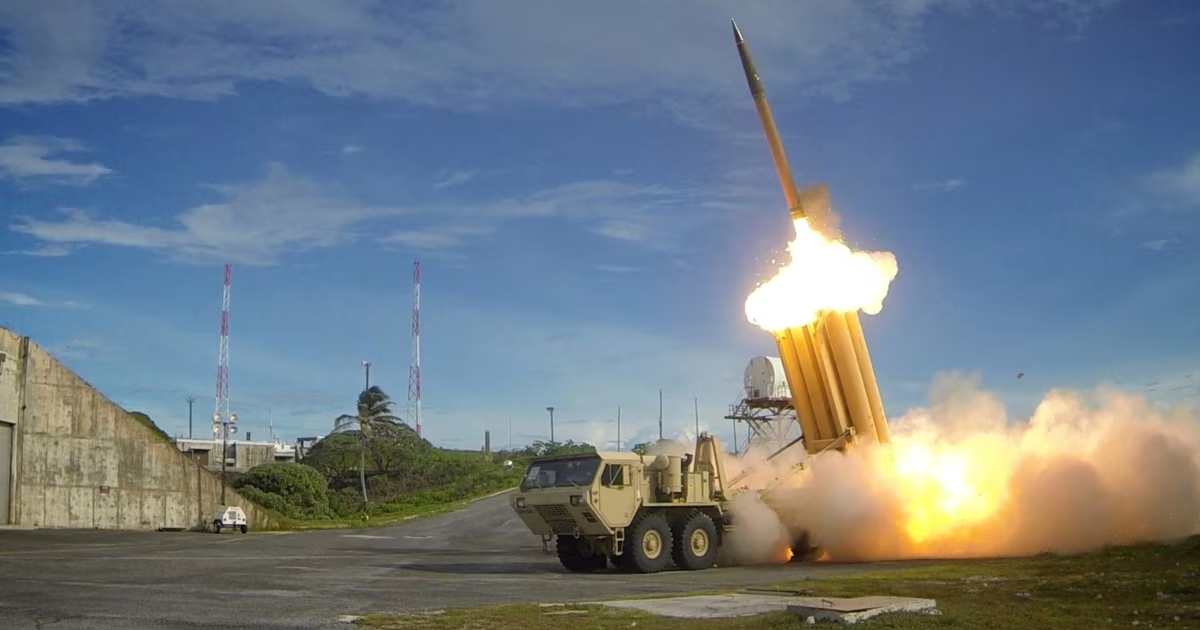
The Terminal High Altitude Area Defense is a mobile ballistic missile defense system developed by Lockheed Martin for the United States Missile Defense Agency. It is designed to intercept short-, medium-, and intermediate-range ballistic missiles during their terminal phase of flight, either inside or just outside the Earth’s atmosphere.
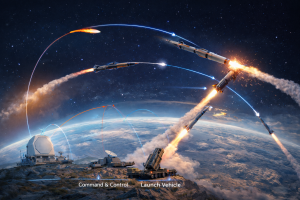
THAAD is part of a layered missile defense architecture and is specifically optimized for high-altitude terminal interception. The system combines mobile launchers, advanced radar systems, interceptor missiles, and battle management command infrastructure into a single integrated defensive network.
The core technological component is the THAAD interceptor missile. Unlike traditional surface-to-air missiles that rely on explosive warheads, THAAD employs a hit-to-kill kinetic interception method. The interceptor destroys incoming ballistic missiles through direct impact at extremely high velocity. This approach eliminates the need for proximity detonation and reduces the risk of explosive fragmentation over defended areas.
Each THAAD missile uses a solid-fuel booster to accelerate toward the target before deploying a maneuverable kill vehicle equipped with infrared sensors and precision guidance systems. The kill vehicle performs terminal course corrections to collide directly with the incoming warhead.
The system’s sensor backbone is the AN/TPY-2 Radar, a high-resolution X-band radar capable of detecting and tracking ballistic missile threats at long distances. The radar provides precise trajectory data that allows the battle management system to determine interception solutions.
A typical THAAD battery includes:
- Multiple truck-mounted launchers
- Interceptor missile canisters
- AN/TPY-2 radar
- Fire control and communications units
- Support vehicles for power and logistics
The launchers are mounted on heavy tactical trucks, enabling rapid relocation and deployment. This mobility allows the system to be repositioned based on evolving threat vectors.
THAAD systems are also integrated with broader missile defense networks, including Aegis-equipped ships and Patriot batteries, allowing shared sensor data and cooperative engagement capabilities.
2. Role & Battlefield Function
THAAD operates at the operational and strategic levels of missile defense, protecting large geographic areas and high-value assets from ballistic missile attacks.
Its primary mission is terminal phase interception of ballistic missiles before they reach their targets. By engaging missiles at high altitude, THAAD increases the defended footprint and provides a second opportunity to intercept threats if earlier layers fail.
Typical defended assets include:
- Major population centers
- Military bases and airfields
- Critical infrastructure
- Strategic command facilities
Within integrated missile defense architecture, THAAD occupies the middle layer between long-range exo-atmospheric systems and shorter-range point defenses.
Operational doctrine emphasizes layered defense. Early warning sensors detect launches, tracking radars calculate trajectories, and THAAD batteries intercept missiles as they descend toward targets.
The system is particularly valuable in regions facing ballistic missile threats from nearby adversaries. It has been deployed in areas such as the Korean Peninsula and the Middle East to strengthen regional missile defense.
3. Capabilities & Limitations
THAAD’s primary capability is high-altitude ballistic missile interception. By engaging missiles in the upper atmosphere or just beyond it, the system can destroy warheads before they enter dense atmospheric layers.
The hit-to-kill approach increases interception precision and avoids detonation of explosive warheads over defended areas.
Mobility allows batteries to protect different regions depending on operational requirements. This flexibility enhances strategic responsiveness during crises.
THAAD also benefits from networked sensor integration, allowing the AN/TPY-2 radar to contribute to wider missile defense tracking networks.
However, limitations exist.
First, each battery protects a finite geographic footprint. Multiple systems are required to defend large territories.
Second, interceptors are expensive relative to many offensive missiles, creating cost-exchange challenges in saturation scenarios.
Third, THAAD is designed primarily for ballistic missile threats, not cruise missiles or low-flying drones.
Fourth, large missile salvos can stress interceptor inventories and engagement capacity.
Finally, highly advanced maneuvering or hypersonic threats may reduce interception windows and complicate tracking.
Despite these constraints, THAAD significantly increases defensive depth against ballistic missile attacks.
4. Strategic Impact
Strategically, THAAD strengthens deterrence by reducing the effectiveness of ballistic missile coercion. Nations protected by advanced missile defense systems are less vulnerable to limited missile strikes intended to force political concessions.
The system also enhances alliance security. Deployment of THAAD batteries in allied territories signals strong defense commitments and increases regional stability.
However, missile defense systems can influence geopolitical dynamics. Adversaries may view large-scale missile defense deployments as undermining their strategic deterrent capabilities, potentially encouraging the development of more advanced offensive missile systems.
As a result, THAAD sits at the intersection of defense technology and strategic balance.
In modern conflict environments where ballistic missile proliferation continues to expand, systems like THAAD provide a critical defensive layer. While no missile defense system can guarantee complete protection, THAAD significantly reduces the vulnerability of key assets and populations to missile attack.
Its importance lies not in creating an impenetrable shield, but in raising the cost and uncertainty of missile strikes, strengthening deterrence and strategic stability in regions facing persistent missile threats.



Comments are closed